Most reseller hosting businesses hit the same wall at some point. The operation is growing, but the processes holding it together were designed for a smaller client base. When a client upgrades or cancels, that information travels between systems by hand.
For a business model whose profit averages 30%, a single billing error or missed provisioning trigger can erase an entire month's profit. This is, in short, an integration problem, one that automation can solve.
This post covers three reseller hosting automation platforms worth evaluating, what each does distinctly well, and how to match the right tool to your operation.
Why Manual Management Is Not Just Inefficient But Expensive?
Manual provisioning creates a support vortex where each step introduces delay. Each delay requires a follow-up, and each follow-up ultimately consumes billable time. A single provisioning mistake, be it a wrong disk quota, missing SSL, or misconfigured DNS, generates a support ticket. That ticket averages 15 minutes of staff time to resolve. For a reseller with 100 new accounts annually, provisioning errors can consume 25+ hours of support time per year. Automation can prevent these easily preventable mistakes altogether. The result is predictable revenue, fewer support tickets, and the capacity to scale client volume without adding headcount.
The Only Three Reseller Hosting Platforms To Consider For 2026
Here are the three established platforms that measure well against the reseller hosting requirements in 2026. WHMCS
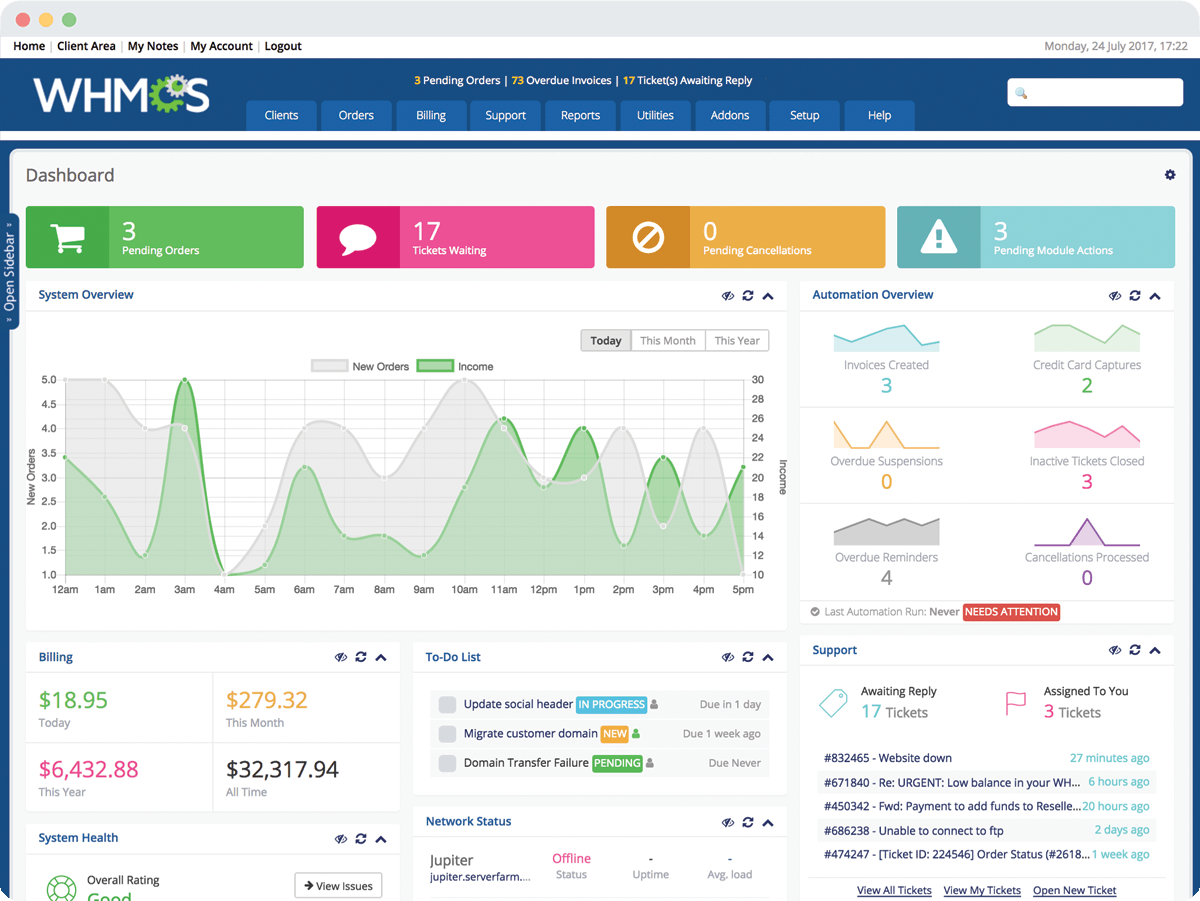
WHMCS is a platform designed specifically for web hosting. It integrates natively with cPanel and Plesk, both part of the same WebPros ecosystem. It provisions automatically when payments clear and can execute domain registration and renewals on a schedule.Where it works
- Native control panel integration eliminates provisioning bottlenecks.
- Over 60 payment gateways and 25 domain registrars connect out of the box.
- The client portal handles invoices, services, and support history.
- MarketConnect adds revenue potential without operational cost.
- Resellers can offer SSL certificates, site security, and other third-party products with one click.
- The Marketplace extends functionality through thousands of modules and themes.
Best ForWHMCS fits resellers who prioritise reliability, native integration, and a proven ecosystem. It suits operations where time is the primary constraint and growth is the primary goal.
HostBill
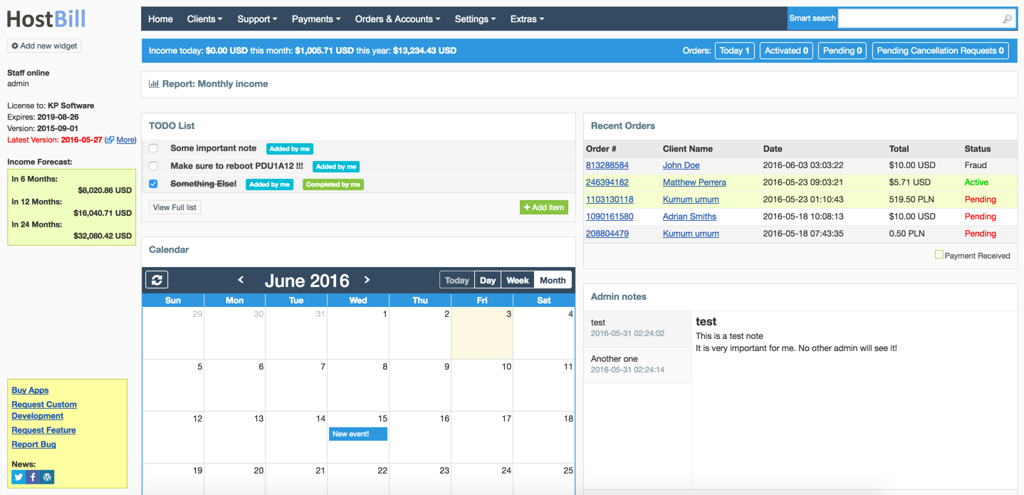
HostBill is built for operational complexity, i.e., for those hosting resellers who want deep customisation across billing models, provisioning rules, and client communication. Where WHMCS handles standard reseller hosting setups, HostBill can do shared hosting, VPS, cloud infrastructure, SSL certificates, and domain registration; all of which are billed and provisioned through a single client area.Where it works
- Over 200 integration modules cover a wide range of control panels, hypervisors, registrars, and payment gateways.
- Multi-brand and white-label configurations are supported out of the box.
- Invoice templates and provisioning logic are highly configurable.
- Multi-currency and multi-language support.
Best ForHostBill works best for resellers with dedicated technical staff who need granular control and are willing to live with and manage all that complexity.
Blesta
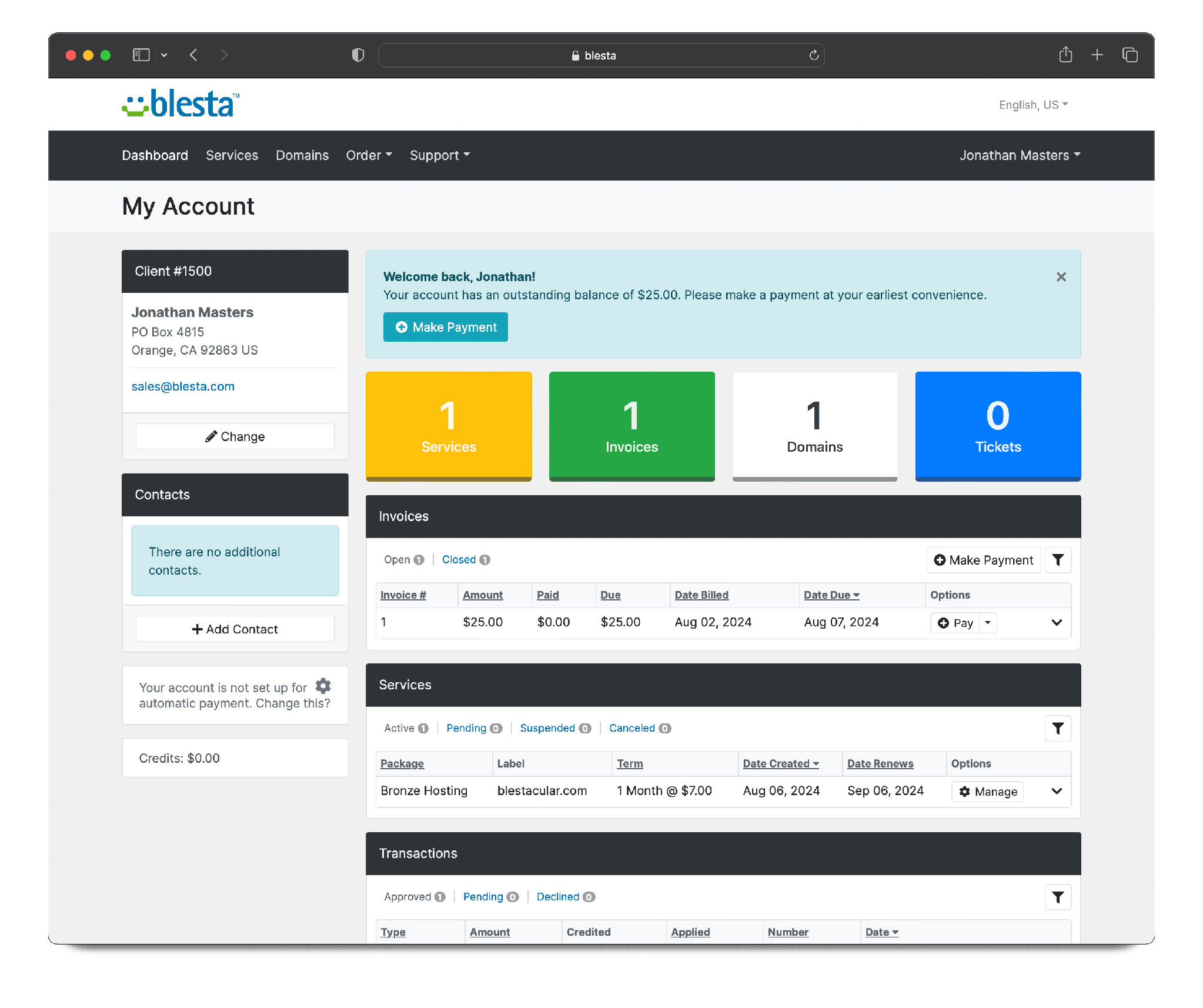
Blesta, unlike the other two options on the list, is an open source reseller hosting solution. This means your teams can build on top of it without hitting a proprietary wall, which makes it a perfect solution if your specific workflow requirements have no off-the-shelf module options.Where it works
- The core feature set covers automated billing, recurring invoicing, service provisioning through cPanel/WHM, Plesk, and SolusVM.
- It supports a white-label client portal and support ticketing.
- Native multi-currency support.
Best forBlesta works best for resellers with development resources who prioritise low upfront costs and are comfortable managing their own integrations.
Summing It Up
WHMCS, Blesta, and HostBill each address reseller hosting automation at different points on the complexity and customisation spectrum. At the end of the day, what matters most is moving away from manual processes. So pick one that best suits your needs. Blesta suits developers who can build integrations. HostBill appeals to those who need extreme configurability. WHMCS offers the most complete integration with the hosting ecosystem and the lowest operational overhead for the typical reseller.
If you are evaluating platforms built specifically for web reseller hosting automation, WHMCS is worth a closer look. Head to WHMCS for more information on what we offer.